Loading...
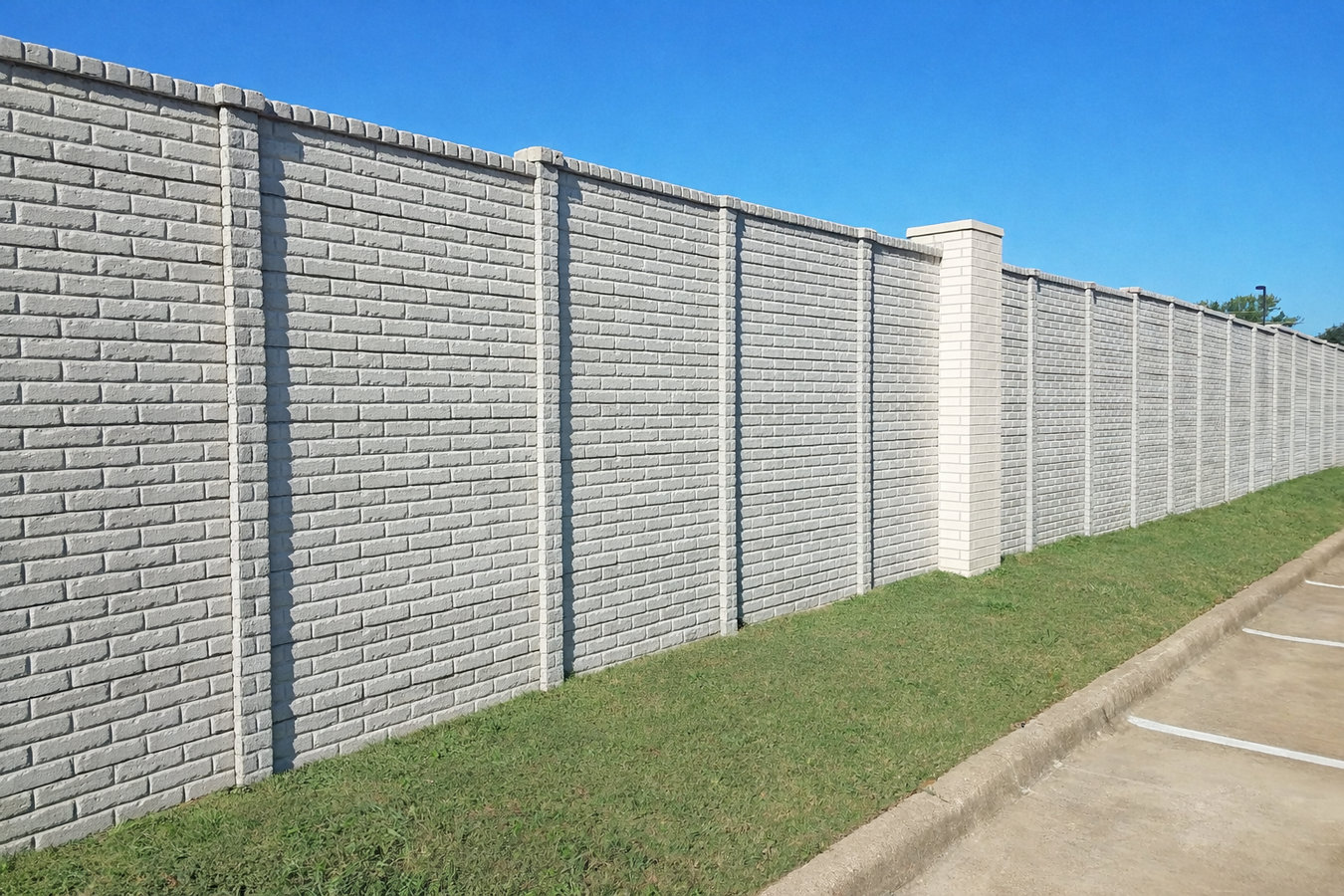
A block wall that shifts, cracks, or leans after one Alaska winter was not built right. We pour every footing below the 60-inch frost line, reinforce for earthquakes, and install proper drainage so your wall holds for decades.
Concrete block walls in Anchorage are built by stacking heavy masonry blocks bonded with mortar onto a footing poured below the local frost line - most residential projects take one to five days on site depending on size, with larger retaining or boundary walls running up to a week or more.
A concrete block wall serves as a garden border, a slope-holding retaining wall, a property boundary, or a structural wall for a garage or building addition. In Anchorage, what separates a wall that lasts from one that does not comes down to three things: how deep the footing goes, whether steel reinforcing runs through the block cores, and whether drainage was built into the wall from the start. Skipping any of these in an Alaska climate leads to leaning, cracking, and failure - usually within a few winters. Concrete block walls are frequently combined with foundation block wall installation when a project involves both above-grade and below-grade masonry work on the same property.
AKM Anchorage Masonry builds concrete block walls throughout Anchorage and across our 12-community service area. We visit every site before quoting because slope, soil, and drainage conditions at your specific property determine how the wall needs to be built - not a phone description.
If soil washes down a hillside onto your lawn, driveway, or foundation after rain or snowmelt, the slope is not stable. In Anchorage, spring thaw sends a lot of water moving fast through yards, and without something holding the soil in place, erosion compounds every year. A concrete block retaining wall stops that movement and protects your landscaping and foundation.
Cracks running through the blocks, gaps where mortar has fallen out, or a wall that visibly tilts when you stand back - all of these signal a compromised structure. In Anchorage, the freeze-thaw cycle is the most common cause: water gets into small cracks, freezes, expands, and makes them bigger every winter. Catching this early means a repair; ignoring it usually means a full rebuild.
Many Anchorage properties sit on uneven terrain, and a hillside that cannot be used for a garden, play area, or patio is wasted space. A terraced retaining wall system can level out sections of a steep yard and turn an unusable hillside into functional outdoor space. Homeowners often discover this option when they start thinking about landscaping improvements.
If there is no defined boundary between your yard and a neighbor's, foot traffic, drainage, and landscaping disputes can become recurring problems. A concrete block wall is a permanent, low-maintenance boundary that does not rot, rust, or need painting - an important advantage in Anchorage's wet climate where timber fencing deteriorates quickly.
Every concrete block wall project starts with the footing - the buried concrete base the wall sits on. In Anchorage, that footing has to reach roughly 60 inches below grade so the freeze-thaw cycle cannot push it up and tilt the wall above. We excavate to the required depth, pour the footing, and let it cure fully before stacking a single block. For walls of any meaningful height, steel rods run vertically through the hollow block cores and those cores are filled with concrete - this is standard practice in Anchorage because of seismic risk, and it makes the wall dramatically more resistant to movement. Drainage is included in every retaining wall project: gravel backfill and perforated pipe behind the wall carry water away before it can build up pressure against the blocks. If your project also involves foundation work, we frequently coordinate concrete block wall construction alongside foundation block wall installation to cover both the below-grade and above-grade masonry in a single project.
For walls that require a building permit - which in Anchorage includes most walls over four feet tall and all retaining walls holding back significant soil - we handle the application and coordinate any required inspections. We also work with licensed engineers when the Municipality of Anchorage requires a stamped design for taller or more complex walls. When a project involves both slope stabilization and boundary definition on the same property, we often combine block wall construction with retaining wall construction so the homeowner has one contractor handling the complete project.
Suits homeowners with a sloped yard that is eroding or unusable - built with frost-depth footing, steel reinforcing, and drainage backfill included.
Suits homeowners who want a permanent, low-maintenance boundary that does not rot or rust in Anchorage wet conditions the way timber or metal fencing does.
Suits homeowners who want to extend Anchorage short growing season with raised beds that warm up faster in spring and hold their shape for decades.
Suits homeowners with an existing wall that is leaning, cracking, or showing mortar gaps - we assess whether repair is viable or whether a full rebuild with proper frost-depth footing is the better answer.
Anchorage has one of the deepest frost lines of any U.S. city - ground freezes to roughly 60 inches, or five feet, in a typical winter. A footing that does not reach below that depth will be pushed upward by the freeze-thaw cycle, tilting the wall above it and eventually cracking it apart. This is the single most common reason block walls fail in Alaska - and it is entirely preventable with proper footing depth. Seismic risk adds another layer of complexity. Anchorage sits in one of the most seismically active regions in North America. The 1964 Good Friday earthquake - a magnitude 9.2 event - caused widespread structural failure across the city, and smaller quakes are routine. Steel reinforcing through the block cores is not optional here - it is what keeps a wall intact when the ground moves beneath it.
Homeowners in Knik-Fairview and Wasilla face the same frost depth and seismic conditions as Anchorage proper. We serve both communities with the same construction standards - frost-depth footings, reinforced cores, and drainage backfill on every retaining wall. The Mason Contractors Association of America provides industry guidelines on block wall construction standards, and our work follows those practices adapted for Alaska conditions.
We respond within one business day. A good mason needs to see your site before quoting - a phone number for a block wall is rarely accurate because slope, soil, and access conditions vary so much across Anchorage properties. We schedule an in-person visit at a time that works for you.
We look at where the wall will go, assess drainage and soil conditions, and measure the run. You get a written estimate that breaks out labor and materials - including footing excavation, which is often a bigger portion of the cost than homeowners expect in Anchorage because of frost depth requirements.
We handle the permit application if one is required. Once approved, the crew excavates to below the frost line, pours the concrete footing, and allows it to cure before blocks go up. This step can take a week or more to complete properly - do not trust a contractor who skips or rushes the footing.
The crew lays blocks course by course, checking level and plumb at each row, with steel reinforcing and concrete fill in the cores as they go. Once the last block is set, drainage is installed if needed, the site is cleaned, and we walk you through the curing period before we leave.
Free on-site estimate. No obligation. We respond within one business day.
(907) 615-8067Every footing we pour reaches below the 60-inch Anchorage frost line. This is non-negotiable in Alaska - a footing that does not go deep enough will be pushed up by the freeze-thaw cycle, and the wall above it will not survive a decade. It is the most important variable in block wall longevity here, and we never cut depth to save time.
We run steel rods through the hollow block cores and fill those cores with concrete on every wall we build in Anchorage. The 1964 earthquake reshaped this city, and smaller seismic events are common. A block wall without reinforcing is a wall that may look fine until the ground moves beneath it.
We pull every required permit from the Municipality of Anchorage and coordinate required inspections. You should not have to navigate municipal permitting yourself - and a contractor who suggests skipping it is signaling a problem with how they do business.
We serve Anchorage and 12 surrounding communities, from Wasilla and Palmer in the Mat-Su Valley to Soldotna, Kenai, and Homer on the Kenai Peninsula. Every project gets the same frost-depth and seismic standards regardless of where it sits on the map.
The details that keep a block wall standing in Anchorage are not complicated - but they do require a contractor who actually knows Alaska conditions. We give you a straight estimate and build it right the first time.
Below-grade masonry work for new foundations, additions, and crawl space walls that need to meet Anchorage frost and seismic requirements.
Learn more about Foundation block wall installationPurpose-built slope stabilization with engineered drainage for Anchorage hillside properties and eroding yards.
Learn more about Retaining wall constructionThe outdoor masonry season in Anchorage is short and contractors fill up fast. Contact us now for a free on-site estimate and a real start date.