Loading...
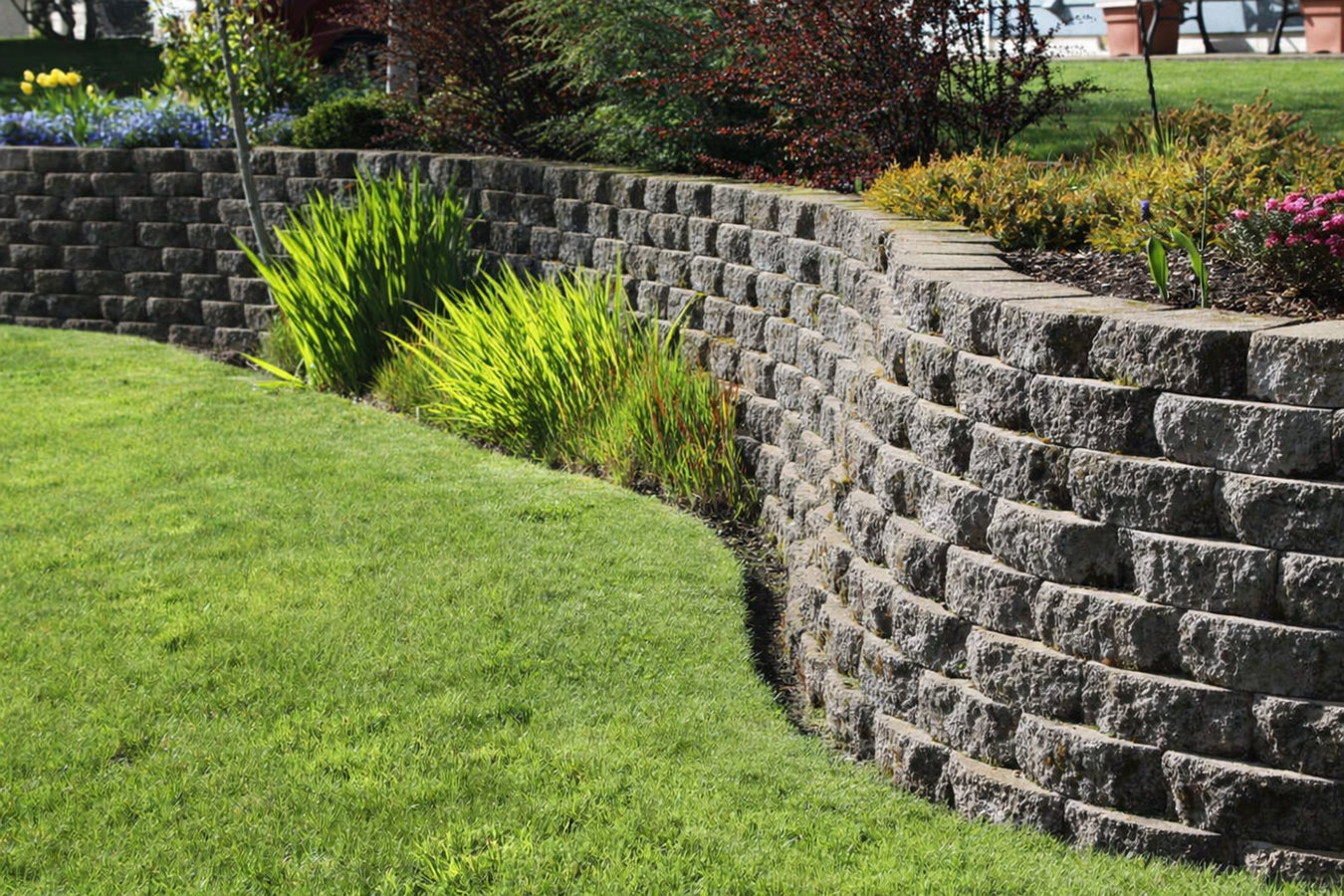
Slipping soil, unstable slopes, and spring flooding do real damage in Anchorage. We build retaining walls anchored below the frost line with proper drainage so the wall holds - not just for one winter, but for decades.
Retaining wall construction in Anchorage means building a permanent structure that holds back soil on a slope and redirects water away from your property - most residential projects take two to five days once permits are in hand and the ground is workable.
A retaining wall does one essential job: it holds soil in place on a slope so it cannot slide, erode, or collapse toward your driveway, foundation, or lower yard. Without one, gravity and Anchorage spring snowmelt can move surprising amounts of soil over time. The problem gets worse each year as water saturates the ground and freeze-thaw cycles loosen it further. Retaining wall construction is also frequently paired with masonry restoration when an older wall has failed and needs to be rebuilt rather than repaired.
AKM Anchorage Masonry builds retaining walls across Anchorage and the surrounding region. We start every project with an in-person site visit, because the soil conditions and drainage situation at your specific property determine how the wall needs to be designed - and those details cannot be assessed over the phone.
If the soil in your yard seems to be slowly sliding toward your driveway, foundation, or a lower area of the property, the slope needs to be stabilized. In Anchorage, this movement often becomes most obvious in spring when snowmelt saturates the ground and gravity takes over. Left alone, creeping soil can bury landscaping, block drainage, and eventually damage your foundation.
A retaining wall that has started to tilt forward, developed horizontal cracks, or shows a visible bulge is under more pressure than it can handle. This is especially common in Anchorage after a hard winter, when repeated freezing and thawing has pushed the wall out of position. A leaning wall does not fix itself - it will continue to move until it fails entirely.
If you consistently see standing water collecting at the bottom of a slope after rain or snowmelt, water is not draining away properly. That standing water puts pressure on whatever is holding the slope in place and saturates the soil beneath it. A retaining wall with drainage built in redirects that water before it causes structural damage.
If you want to add a patio, garden bed, or parking area to a sloped backyard, a retaining wall is usually the only way to create and hold that level ground permanently. Many Anchorage homeowners on hillside lots have usable space waiting to be unlocked - a properly built wall is what makes it accessible and safe.
The right wall for your property depends on the height of the slope, the type of soil behind it, and how water currently moves through the area. We build with concrete block, natural stone, and poured concrete - each material has different strengths depending on the load it needs to hold, the aesthetic you want, and your budget. Drainage is included in every project, not offered as an add-on. Gravel backfill and perforated pipe behind the wall carry water away before it can build up pressure. If your project also involves leveling an area for a patio or outdoor structure, we can combine wall construction with masonry restoration to address any existing damaged masonry at the same time.
For walls taller than four feet, we work with licensed engineers when the Municipality of Anchorage requires a stamped design. We handle the permit application and coordinate any required inspections. For hillside properties in southeast Anchorage - where slopes are steeper and soil conditions can be more complex - we assess whether a geotechnical review is needed before we quote the project. Homeowners also frequently combine retaining wall work with concrete block wall construction when the same project requires both slope stabilization and a structural property boundary.
Suits most residential slopes in Anchorage - segmental concrete block systems are engineered for freeze-thaw conditions, are available in a range of finishes, and allow for geogrid reinforcement on taller walls.
Suits homeowners who want a permanent, high-aesthetic wall that blends into a natural landscape - stone walls are extremely durable in cold climates and can last well over 50 years when built correctly.
Suits situations where a smooth, high-strength surface is needed or where engineering requirements call for a specific structural specification - common for taller walls or walls near structures.
Suits homeowners with an existing wall that is leaning, cracking, or failing - we assess whether repair is viable or whether a full rebuild with proper drainage is the better long-term answer.
Anchorage sits in a bowl between the Chugach Mountains and Cook Inlet, and a large share of its residential neighborhoods are on or near hillsides. The Hillside, South Addition, and Chugach foothills areas have steep slopes with soils that can be silty, poorly draining, and prone to movement - conditions made more demanding by the deep frost that forms every winter and the snowmelt that follows every spring. Anchorage ground can freeze four feet deep or more, which means a retaining wall foundation must go down far enough to avoid frost heave - otherwise the wall will tilt and crack within a few winters. The Municipality of Anchorage Development Services requires permits for walls above a certain height, and hillside properties may require additional geotechnical review before a permit is issued.
We work on retaining walls across Anchorage and serve nearby communities as well. Homeowners in Palmer and Wasilla deal with similar hillside terrain and frost depth challenges throughout the Mat-Su Valley. Contacting us in late winter or early spring gives you the best chance of getting a project scheduled before Anchorage summer slots fill up.
Reach out by phone or through our contact form and we will respond within one business day. We ask a few questions about your slope, any existing wall, and what you are trying to accomplish. We do not quote over the phone because soil and drainage conditions vary too much across Anchorage to be accurate without a site visit.
We visit your property, walk the slope, assess soil and drainage conditions, and discuss material options with you. We will tell you upfront if your project requires a permit or engineering review before work can start. You receive a written estimate that breaks down the wall, drainage work, and any permit costs separately.
Once permits are in hand and the ground is workable, we excavate to the depth required to get below Anchorage frost penetration. This foundation work is the most important part of the project - it is what keeps the wall from tilting or cracking as the ground shifts with the seasons.
We build the wall and install gravel backfill and perforated drainage pipe behind it to carry water away safely. Once complete, we walk the finished project with you, confirm drainage direction, and explain any maintenance to watch for. If an inspection is required, we coordinate that before closing out the project.
Free on-site estimate. We assess soil and drainage before we quote anything. No obligation.
(907) 615-8067Every wall we build in Anchorage is anchored below the frost line. We tell you the planned foundation depth before you sign anything, and we do not cut corners on that step to lower the quote. A wall that fails because the foundation was too shallow is a far more expensive problem than the cost of doing it right.
The Municipality of Anchorage requires permits for walls above a certain height, and hillside properties can require additional review. We handle the application and coordinate any required inspections. When the job is done, you have documentation that the work was inspected and meets local standards - which matters when you sell your home.
Water is the main reason retaining walls fail. Every wall we build includes gravel backfill and perforated drainage pipe behind it. We do not offer drainage as an upgrade or add-on - it is built into every project because Anchorage spring snowmelt puts real hydrostatic pressure behind any wall that does not handle it correctly.
Anchorage hillside lots present soil and slope conditions that flat-yard contractors are not prepared for.The Mason Contractors Association of America maintains standards for structural masonry work that guide how walls are designed for challenging sites. We apply those standards alongside direct experience working on Anchorage hillside properties where the stakes are higher.
Retaining walls fail when shortcuts are taken on the foundation or drainage - not because of the material chosen for the face. Every wall we build in Anchorage is designed for what Alaska actually does to a structure in the ground, and we back that up with permits, inspections, and a written scope before any work begins.
Rebuild or repair an existing masonry structure that has deteriorated beyond what routine maintenance can fix - often combined with retaining wall work on older properties.
Learn more about Masonry RestorationAdd a structural block wall to your property for slope stabilization, privacy, or a defined outdoor boundary - built to the same frost-depth standard as our retaining walls.
Learn more about Concrete Block WallsAnchorage construction season books up fast - reach out now and we will visit your site, assess the slope and drainage, and give you a written estimate before summer slots fill up.